Dario Amodei Says the Odds of Civilisational Collapse Are 25%. And I Believe Him.
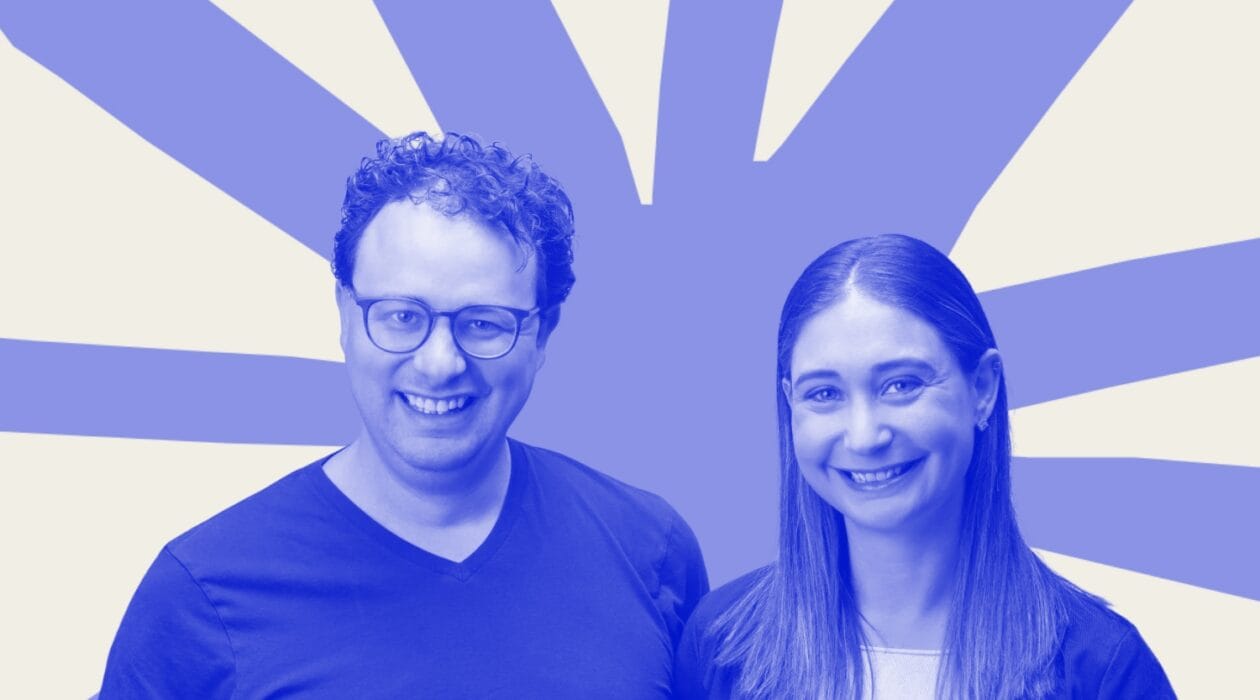
How do you hold responsibility over a technology with the power of a nuclear weapon, being built today by a handful of private companies? I have not been able to let go of this question since I listened to the interview with Dario and Daniela Amodei from Anthropic. Here is how they see AI, how I see it, and why I think this is exactly what we should start talking about openly.
On 10 June 2026, Bloomberg Originals published an interview by journalist Emily Chang with the sibling duo leading Anthropic, the company behind the Claude model. Claude is one of three models currently rewriting the rules in software, science and, increasingly, geopolitics. The interview is not about the product. It is about who should hold the reins when technology moves faster than any regulation can keep up.
Why did it hit me so hard? Because for the first time I heard someone building the most powerful technology in the world openly admit: “I hope for the best and prepare for the worst.” Dario estimates a 10 to 25 percent chance of civilisational collapse from AI. When the journalist tells him that nobody would board a plane with a 25 percent chance of crashing, he simply agrees: “Exactly. 25 percent is too high. That is why our goal is to reduce that probability.” I do not read this as fear marketing. It feels like a view from the inside.
Government or Private Companies? A False Choice
The most powerful moment of the interview came when Dario compared AI to previous breakthrough technologies. Nuclear weapons were built by governments. The internet, GPS, mobile networks — all started in the government sector. AI is the first technology of comparable power built entirely by the private sector, with governments arriving late.
He said, literally: “It is a dangerous and unstable situation. I would not have chosen it myself. I am afraid of this technology when companies have it. And I am also afraid of it when governments have it.” That sentence stopped me. Because in Europe we treat regulation as a binary dispute: either bureaucracy kills us, or Silicon Valley swallows us. Dario offers a third path: mandatory pre-release testing and auditing of models. A bit like aviation and pharmaceuticals. The state does not dictate what an airline manufactures. But it does require that a plane cannot take off until it passes certification. This makes sense, and it is an entirely different debate from “regulate yes or no.”
His illustration of how Silicon Valley turns in a crisis is sharp. The same people who were shouting a year ago that any regulation would destroy innovation are now, after the first real threat (the Mythos model capable of finding critical vulnerabilities in any operating system), calling for nationalisation. Dario said: “You swing from the most extreme anti-regulatory position to the completely communist ‘the government should take it all.’ We need a more sensible, moderate approach.”
When Claude Helps Kill
The second powerful moment I am taking away is the section on military use. Bloomberg reports that Claude is being used by the US military in the war in Iran, helping to identify targets. A US official stated that with the help of language models, the military moved from the ability to strike a thousand targets a day to five thousand. In February, a US missile struck a girls’ school in Iran and killed more than 150 people, most of them children.
Dario does not flinch. In the interview he says: “This is a truly terrible thing. It should not have happened. We were willing to risk the future of our company to limit how these models are used.” Anthropic refused the Pentagon’s terms, ended up on a blacklist, and President Trump publicly called their CEO an “ideological lunatic.” Anthropic nonetheless holds to its red lines: no mass surveillance, no autonomous weapons. The principle: the final decision is made by a human, not by AI.
And here I have to stop again. Because in the Czech Republic we barely discuss military use of AI at all. We leave it to the Americans, the Chinese, the Israelis, and then react later. That is wrong. If those of us who operate and invest in this technology cannot articulate where our own red line is, we have nothing to say about where the societal one should be either.
Fifty Percent of Jobs. And Then What?
A year ago, Dario stated that AI could eliminate half of entry-level white-collar jobs within one to five years. In the interview he did not soften that estimate. “I still have the same level of concern. You automate 90 percent of the work. People are ten times more productive in the remaining 10 percent. But eventually it approaches 100 percent.”
What then? Here I agree with him, but only partly. I agree that the pie will grow and new jobs will emerge. I agree with Daniela that human interaction will never disappear entirely. Medicine, for example, will shift so that AI handles diagnostics and doctors spend more time at the bedside. I agree that work in the physical world (manufacturing, construction, care) will grow. But I do not underestimate what Dario himself openly admitted: if the pie grows faster than people’s ability to find new purpose, we will find ourselves in a situation where “revolutions begin.” This is not science fiction. It is a real risk within a horizon I will live to see.
Three Things I Think About Most
This is precisely why my number one priority today is not to buy another AI tool. It is to educate the people already working here and to transform companies so they find their place in this wave and survive it as a whole. In my portfolio companies, I hold to one simple principle: AI is a new operational layer, not a new tool. A company that treats it as just another piece of software will pay twice: once for the licences, and once because the competition will have moved ahead.
From the interview, I am taking away three things I think about often and discuss with my team and portfolio.
First: powerful technology cannot be held by a handful of private companies without any oversight. And the state cannot simply seize it. We must push for a sensible middle ground: mandatory auditing of the most powerful models, transparent testing, international rules. In Europe, we have a chance to build something valuable on this.
Second: responsibility cannot be outsourced. When Dario says that Anthropic is “responsible for thinking through what the risks are and what we owe people if some of them materialise,” he is naming a principle I wish I heard from every technology leader. If I invest in a company deploying AI, it is my obligation to ask where it can fail and who it will affect and how.
Third, and most importantly: we must talk about AI openly. Seventy percent of Americans fear that AI will destroy jobs. The numbers are no different here. If we leave the public conversation to technology enthusiasts on one side and alarmists on the other, we all lose.
I am not neutral on this. Personally, I am an optimist who sees AI as an enormous opportunity for science, healthcare, education and the economy. But optimism without responsibility is naivety.
That is why I recommend the Amodei interview to everyone. This is not classic tech hype. What you get instead is an honest attempt by two people at the centre of the AI universe to name what they fear and what they are doing about it. Worth an hour of your time, and certainly a few more hours of thought and public debate.
Interview link: https://youtu.be/v1wZwxY3CMg
Source: Bloomberg Originals, interview by Emily Chang with Dario and Daniela Amodei, published 10 June 2026.
This topic is further developed in my commentary for Hospodářské noviny. If you want to know where I see the solutions and where my own red line as an investor lies, read here: Who Should Own AI? — HN.cz