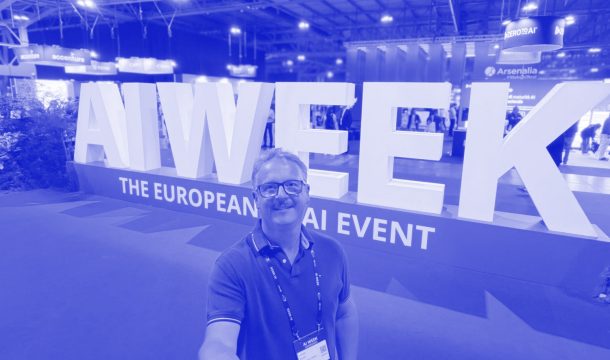
CC.cz: He sold a company worth hundreds of millions, hired a banker, and is teaching his sons how to invest
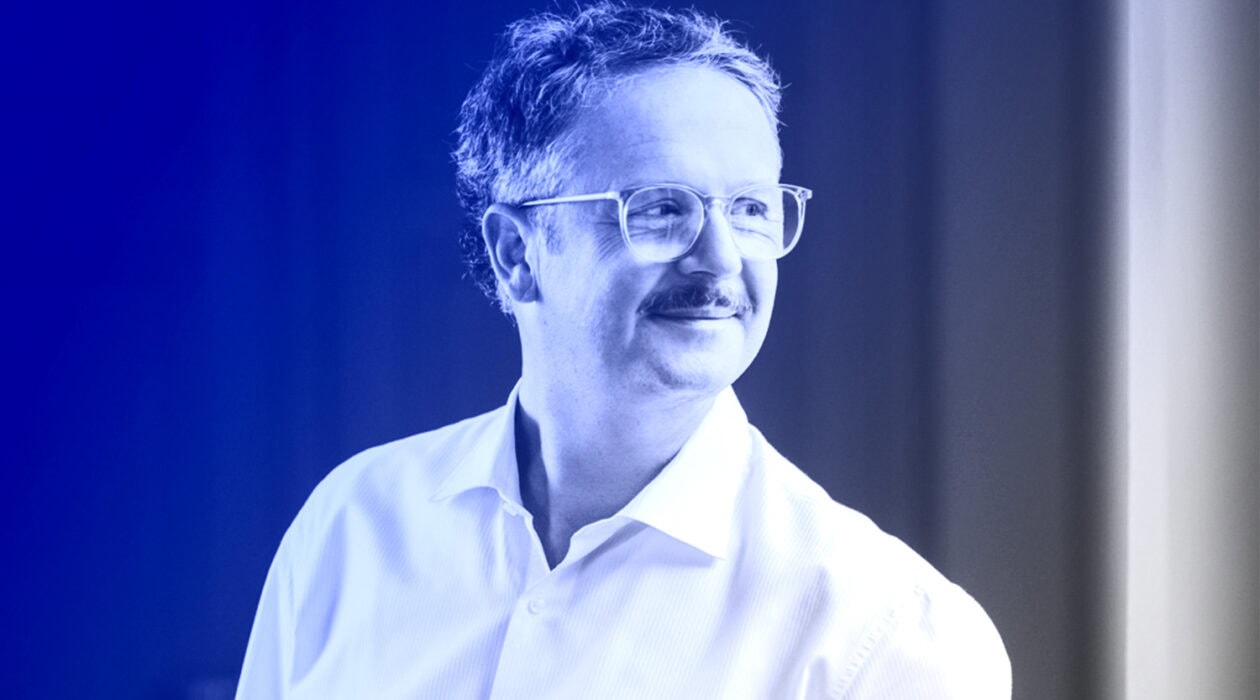
They must not lose their sense of proportion, says Vladan Hejnic, who spent more than ten years building the agency VIVnetworks. Before that, he also ran a business in the UK. Today, he manages a family office and supports the non profit organization Kamdu.
When Vladan Hejnic sold his performance marketing agency VIVnetworks, it marked a new situation for him. He had never struggled financially, but suddenly a large sum of money landed in his bank account and he had to decide what to do with it. At the same time, he needed to teach his sons how to handle it as well. “A friend of mine, a former investment banker, is still teaching them today“, he says in an interview for CzechCrunch. As an investor, Hejnic has been behind the sale of brands such as retro bicycles Tokyobike, La Z Boy recliner chairs, and pet food brand Nativia.
Beyond business, after exiting VIVnetworks in a deal estimated to be worth several hundred million Czech crowns, he also became involved in the Kamdu project. Kamdu operates as a platform connecting students with professionals from real world practice. Through workshops, it shows them what real work in different fields looks like before they finish their studies. One of the partners financing the project is Pavel Řehák, founder of the investment group Direct. “Young people today are losing a sense of what it means to work and to have a job. Through this project, we help inspire them and prevent them from getting lost”, says Hejnic.
The very beginnings of the business journey of the fifty three year old entrepreneur could have come straight out of a local manual on how capitalists are born. In the 1990s, he made his first significant money selling computers, much like Pavel Tykač, Petr Kellner, or Aleš Zavoral of Alza did in their early days. That was simply the era, he laughs. His agency VIVnetworks, which is now part of the multinational group Publicis, later provided online marketing services to companies such as Letuška, Datart, and Mall.
You started doing business in the early 1990s. I often wonder whether it was in some ways easier back then than it is today, because looking back, the opportunities seem enormous. What do you think?
I do not think it was easier. At that time, no one really knew how to get started, and above all, people were very afraid. I come from a family where my parents constantly told me not to say anything anywhere. They still had 1968 deeply embedded in their memory and were afraid to speak even at home. Naturally, this carried over into business as well. My parents never ran a business and told me it was not safe. But when you are young, you have fewer inhibitions. I was hungry for opportunities and felt it would be a shame not to take them.
So how did you start?
I started very simply by assembling computers. Technically, I was not a top expert, but I had friends around me who were, and I knew how to sell. We assembled standard PCs. Some people called us fraudsters from Slušovice because we pretended to have a brand, while in reality it was just assembled components. Within three months, I sold computers worth three million crowns purely through classified ads. That really pushed me forward. I did that for about eight years.
So that was your first big money. Many well known names started that way in the nineties, even Petr Kellner sold copiers.
Exactly. Petr Kellner had copiers. I did this roughly until the end of the nineties. My biggest mistake back then was that I was too inexperienced to know what to do next. No one advised me that it might be a good idea to move into something like ERP systems. Competition was growing, and I eventually decided to hand over the company under conditions that were not entirely favorable for me. I then became an employee at Oracle. I wanted to see how large companies function.
I assume that was the only time you were ever an employee.
Yes, I was an employee for exactly four years. I started as a salesperson for small financial institutions and gradually worked my way up. But I started to turn grey in the corporate environment. It did not make sense to me. So I went back to entrepreneurship. By coincidence, I met an Englishman and together we founded a company in the UK. Every Monday morning I flew there and returned on Friday. We were developing non intrusive advertising formats for online video. This was in 2006, when video advertising in its current form did not yet exist.
That must have been a major learning experience, building a company in the UK.
It was a fantastic school. We had a technology platform that we patented. We also had an Indian partner who owned a development company. I was responsible for organization, delivery, and sales. It taught me not to be afraid to speak English and to operate in an international environment. I worked intensively in that company for about a year and a half, then investors came in. They wanted me to move to the UK with my family, but my wife did not speak English at the time and we were not prepared for that. I remained only as a minor shareholder, and eventually, in 2021, we sold the company to the Dutch firm Azerion. At that time, the company already had over one hundred employees and offices in several countries. I was, however, more of a free rider throughout that period.
It was a tough lesson in how investors can gradually push you out. Over time, the combined stake of us co founders shrank to about one third. In any case, I returned to the Czech Republic in 2008 and started thinking about what to do next. From the UK, I already knew affiliate marketing, which at that time was barely practiced locally.
Affiliate marketing is based on commissions from sales, right?
Essentially yes. It is performance based online advertising. You need systems connected all the way to the e shop to know in real time that a customer came via a specific blogger, purchased something, and paid. We wanted to create a platform where any e shop and any blogger could sign up. And that is how VIVnetworks was founded.
My business partner became Robert Studený, who is an excellent business practitioner and manager. He saw that it worked and committed fully. In the end, we sold goods worth ten billion crowns through our network. In 2022, we sold the company to the French group Publicis.
Are you still active in the company even though it has been sold?
Yes. The deal is structured with earn outs based on performance until the end of 2026. We sold one hundred percent of the company for cash. Today, we remain only in executive roles, while the company is run by professional management. The sale had several phases. In 2019, we were first approached by the American company CJ Affiliate, whose platform we were using, but then COVID happened. Later, Publicis acquired CJ and eventually acquired us as well.
Why was Publicis so interested in you?
They needed more clients and a stronger position in Central and Eastern Europe. At that time, we had up to an eighty percent market share in countries like Hungary and the Czech Republic, and over fifty percent elsewhere. Negotiations with them were very fair, even though many people warned me about the French. They even honored the original deal parameters, and during the prolonged sale process, we grew by one hundred percent.
This industry must be heavily affected by artificial intelligence.
AI is obviously shaking the market. Content websites are struggling because people would rather ask ChatGPT than read camera reviews. We are now trying to figure out how to use AI to our advantage, for example by automating sales departments.
You used the proceeds from selling VIVnetworks to invest through your own smaller family office. How did you think about that? This is something many businesspeople deal with.
After the exit, I was figuring out what to do with the money. I wanted it to serve future generations of my family. I now have a portfolio diversified across currencies and regions. I sought help from a friend who was an investment banker. She now also educates my sons so that they know how to work with money when it eventually comes their way. In addition, we invest in companies where we can contribute our experience in setting up internal processes, sales, and marketing.
How do your sons see it?
Both are currently studying at university, and for now it seems that each will take a different path. What I see as crucial is that they understand how to think about money and how to handle it, so that it does not go to their heads one day. My younger son enrolled at a university in Boston, while the older one studies at the Czech Technical University. Whether and how they will follow in my footsteps remains to be seen.
To teach my sons how to work with money, they regularly receive funds during their studies that they are not allowed to use for anything other than investing in financial markets. Each of them is active in a different way and has a different strategy. The result is that they have learned how to work with investments. They see growth and declines, market news, understand diversification, and know that nothing grows forever. They also have to manage it psychologically.
“After the exit, I was thinking about what to do with the money. I wanted it to be money for future generations of my family. I now have a portfolio diversified across currencies and regions.
And what have they learned, for example?
Let me give you an example. My younger son wanted a new phone for his birthday because the old one constantly needed a power bank. We agreed on a budget, but he insisted on receiving the money in cash and buying the phone only once the old one completely stopped working. In the end, he used the old phone for another two years. He invested the money into his portfolio and always reported how much he had earned. I found it great that he was postponing consumption and choosing to invest instead.
What projects have you invested in personally?
We have a stake in Nativia, which sells healthy pet food for dogs and cats. There, we helped stabilize the company. The founder is incredibly creative and many years ago created her own TV show, A Cat Is Not a Dog, to support the brand. We also distribute well known La Z Boy chairs in Poland, the Czech Republic, and Slovakia. We invested in Dreamy, a company that develops healthy mattresses and pillows alongside its e shop. We have a stake in the regional distributor of Tokyobike bicycles. In general, I enjoy offline businesses more because margins there are much higher than in e commerce, where every percentage point is fought over.
And what comes next?
I am interested in the connection between traditional companies and artificial intelligence. I would like to acquire traditional companies that do not use AI at all and fully increase their efficiency through technology across processes, sales, and marketing. I would rather do this as an owner than as a service provider, because owners often resist major changes. This is something we are focusing on now. AI is a technology that can create enormous efficiency gains. When you use it as an investor and owner, the results can be significant.
You are also involved in the non profit project Kamdu. Is that your philanthropic activity?
Yes, Kamdu is very close to my heart. I am convinced that we must also give money back to society, and supporting the younger generation makes the most sense to me. Kamdu organizes workshops for high school and university students with professionals from practice. We want to show them what different professions actually involve so that they can realize early on, for example, that they do not want to be lawyers or journalists and save years of study. Over the past year, we have organized almost two hundred workshops with more than one thousand students participating. We are now looking for a sustainable business model for Kamdu so that the project does not depend solely on donations and can expand beyond Prague, Brno, and Zlín, where it currently operates.
So you would like to charge for the workshops?
We have introduced a registration fee that motivates students to actually attend. We are still experimenting with the amount, because even a few hundred crowns can be a barrier for some students. For us, it is not a source of income. We rely on donors and other projects, but we also do not want to make it completely free. It is more about the principle.
Original source: CC.cz