I Founded the Company. Today I Report to Him.
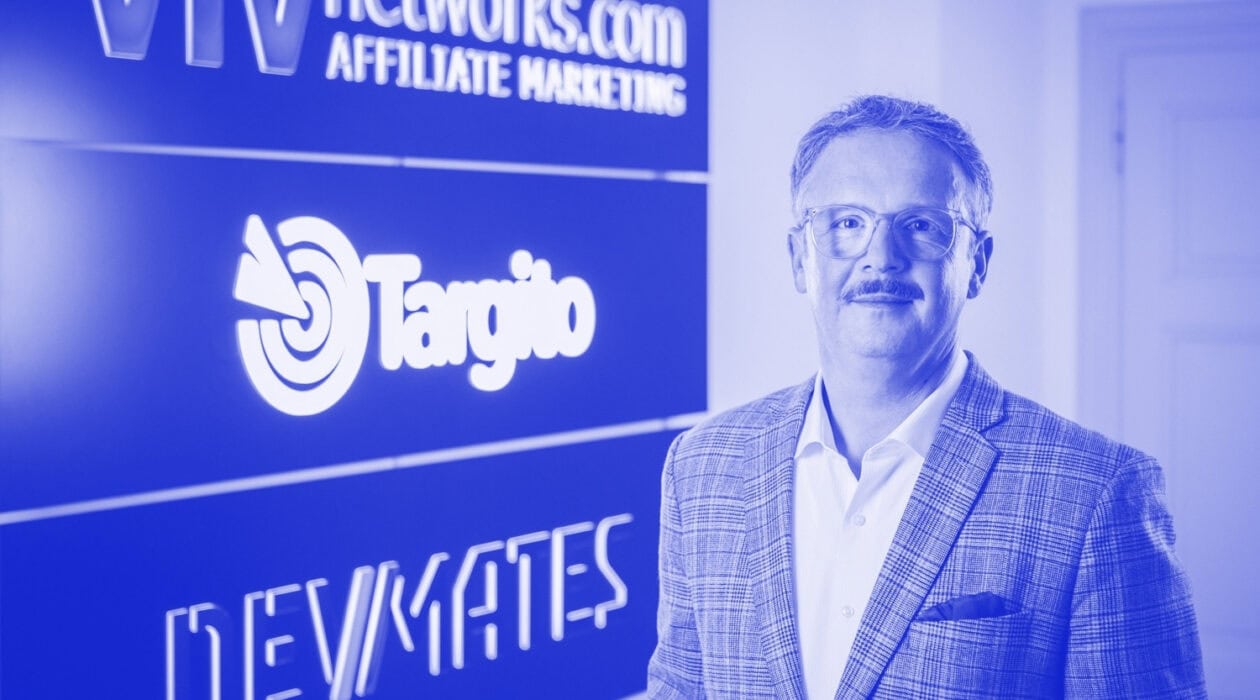
On the coexistence of a founder-investor and a CEO, on Honza Baštýř, head of Targito, and on why I took one area of management and placed myself under him in it.
Last time on this blog I reflected on what qualities the best CEO has. And on how I eventually understood that for my companies I have to look for the one who fits the stage the company is currently in.
Today I follow up with a completely open story about one specific company, Targito, and one specific person, Honza Baštýř, whom I invited to run it and who also became a co-owner. I will tell you plainly what it cost me.
It Took Me a While
When Honza Baštýř took over Targito, I felt he was making decisions slowly. I am used to deciding fast. Often on instinct. Over thirty-three years in business I developed this ability to the point where I consider it a strength, and honestly, for a long time I thought everyone should have it.
Honza is different. He needs data, time to think and the chance to go through the options until he understands them. When I wanted an answer immediately, I got a question about what he was supposed to base the decision on.
It took me a while to realise this was not his weakness. He was doing exactly what the company needed at that moment and, honestly, what I was unable to give it.
In my previous article I listed this among the signals that a founder is starting to slow the company down: “Decisions made too quickly where the company now deserves deliberation.” Only in hindsight did I realise this was exactly what I had been holding against Honza. And wrongly, it has to be said.
Without deliberate decision-making, and I do not mean slow, you will not get through the next stage of a company.
What I Handed Over to Him
I founded Targito and led it for a while. Then I handed it to a hired manager with a clear brief: double the revenue. He doubled it. He delivered what I asked for.
But it came with a side effect I had not thought through. Let me be completely honest. To make those numbers work, everything, both services and licences, was pushed through our company. Logical from a revenue perspective. A disaster from the market’s perspective.
The partners we were supposed to grow through in the long run gradually came to see us as their competition. And they started avoiding us. Another problem was that we took on clients who were not a fit for us. Their dissatisfaction and departures shook our good name.
I have to admit it was a flaw in the brief. I approved that brief as the owner and I got exactly what I ordered, including what I did not order. The manager optimised the metric I gave him.
Then we hit a glass ceiling. We could not generate more revenue on our own and the only way forward led through partners who did not want to talk to us. Honza took this over.
Reputation Cannot Be Talked Away
Repairing a reputation in the market is work you cannot speed up. It is exactly the type of task a “finder” like me is not built for.
Honza started with transparency. He explained to partners plainly how the economics of our consultants work. They are not salespeople but platform specialists whose job is to get the client to use it fully. Moreover, margins on licences are not high enough for us to cover them ourselves, so the client pays for them separately.
There is nothing pretty about it. It is simply the truth, said out loud and without wrapping.
But the main thing nobody can simply say. Nobody can promise that we will not undercut them on price or go directly for their client. You prove it one contract after another.
This takes years and cannot be rushed. It requires someone who holds the line even when one quick decision would bring money immediately. I did not previously have that kind of person in the role.
Today, as a result, we have our first partners offering Targito to their customers. I know how modest that sounds. Given where we started, I consider it the most valuable result of the past two years.
The Analyst Where I Expected an Introvert
Honza is a technical person by education and by nature. A software engineer, with a bachelor’s from Robert Gordon University in Aberdeen and a master’s from St Andrews. I expected exactly what such a profile suggests: systems, architecture, technology.
He can do all of that. Moreover, he understands what is happening today with technology around artificial intelligence, and thanks to him Targito holds a position in what it delivers for clients that we need not be ashamed of in our region.
What I did not expect is his empathy. He is interested in how people think and what motivates them internally. And more rarely still, he knows he has ground to make up here and is deliberately learning. He did not settle into the role of a technician who does not understand people and treats that as a given.
The combination of an analyst who is interested in people is, in my experience, far rarer than either of those two qualities on its own.
On top of that, in knowledge of technological opportunities and in reading the current situation, we are very close. I was recently pleased by the eagerness with which he told the team we want to be an AI Native company and set the direction in the mid-market.
What Do You Actually Want From Me?
I remember one situation precisely.
I wanted Honza and the whole team to start working with the Scale Up methodology. In my head it was settled: they needed it. So I began nudging him toward it carefully, hoping he would arrive at the need himself and feel it was his idea.
He stopped me almost immediately. He asked what I wanted from him and what I was trying to achieve. And he added straight away that he does not need to be nudged into arriving at something himself. So I told him directly. He weighed it and decided. He is now in his second year of that masterclass and it helps the entire management team.
That is exactly him: he refused the path and asked for the goal. And I learned something about myself from it. That detour was not clever. It was manipulation, however well intentioned. And now I know that with Honza it is always faster to go straight.
Honza can describe precisely how to work with him. No sauce around it. Facts. Clear statements. And above all, tell me directly what you are after and what you want to achieve. When he gets that, he can assess the matter and help.
Issuing a user manual for yourself is an act of self-knowledge almost nobody performs. And it is the most direct route to what I called managerial predictability last time.
When a Person’s Principles Become the Company’s Principles
As an analyst, Honza cannot stand management by instinct. He wants rules and structure. Not behaviour scripted down to the detail, but rather simple guidelines that leave room for individual solutions.
This is exactly what Targito needed to build and over two years we covered a good stretch of it. We now run the company on systems that genuinely hold it together across several areas at once.
The most interesting part, though, is how his personal principle carried over into the Targito brand.
Targito promises nothing it cannot deliver. It sounds obvious. In practice, however, it is not.
Remember how the marketing of large software companies worked for many years. Microsoft was the master of it. It announced a direction, said what it would do, and the market translated that in its head as if it already existed.
Companies did not buy from competitors who actually had it earlier, because they were waiting for Microsoft. It delivered a few months later, but it had the customer locked in through expectations its marketing kept building.
Things He Does Slowly on Purpose
Let me return once more to where I started.
Honza does not make personnel decisions off the cuff. When he has to let someone go, he weighs it for a long time and I can see it costs him something personally. It used to annoy me. Today I see in it the same thing as in his deliberation about everything else.
In my previous article, among the signals that a founder is starting to slow the company down, I listed fast dismissals and people swaps. I wrote it because I know it from my own experience. In the early stage it works that way and it is right. In a company that needs to build structure and be predictable, it is poison.
A Work Ethic I Have to Admit Something About
Honza gives Targito all his free time. Honestly, I do not think he has any other hobby. Targito is his hobby. Even in his time off he works on these things and thinks about how to do them better. Much of where the company stands technologically today came about exactly this way.
I have to be honest here, because in April I wrote something that at first glance does not fit with this. Back then I argued that nobody should sacrifice their health, relationships and family, and that I was an idiot when I thought a relationship was also about performance.
I still think that. The difference is whether a person is sacrificing or whether they enjoy it. The first is a price, the second is happiness. I do not have weekends myself. I work when I can and rest when I need to.
In this we are extremely close, Honza and I. Which is probably also why his deliberation bothered me more than it should have. People find differences hardest to bear in those with whom they otherwise have a lot in common.
Where I Stand in This Today
This is the part I promised last time and now have to deliver.
In the previous article I wrote that when a founder recognises he has stopped delivering, he should step back into the owner role and take one area, the one he understands and enjoys.
I did that. Finance is the area I took. Today I am putting it together and helping with sales as well.
And I did one more thing I did not write about last time, because it had not occurred to me then how important it is. In this area I report to Honza. In a company I founded.
It is not a gesture. On the contrary, it is the only way this can work. A founder carries weight in his own company that he does not lose by stepping down from a role. He can silence the CEO without ordering anything. It is enough that he says his opinion out loud. I have to watch for this every day and it does not happen by itself.
So I check it out loud. Is this a brief? Is this the goal? What am I supposed to do about it? And then I do it and it is done. I do not tell him what to do. I do not run anything on the side on my own initiative. And the outcome remains his responsibility, because otherwise it is not his company to run.
I will not pretend it comes easily to me.
Why He Is the Right Person for This Stage
Targito is not currently in a stage where growth is chased at any cost. It is in a stage where we align the individual areas, build the structure and prepare the ground so that further growth can come through partners, which is exactly where we closed the door on ourselves.
That is work measured in years, not quarters. It requires someone who agrees on the goal and then holds the line even when it is boring. Who does not change direction every week. Who lets things go through the data even when the owner is pushing him to finally decide.
I cannot do it. As I admitted last time, and admit again now.
In Closing
When I started writing this text, I thought it would be about Honza. It is largely a text about me, which I only realised at the third draft.
The hardest thing I learned over those two years fits on a single line: what bothers you about someone may be exactly the reason you need them. Especially when it is a quality you lack yourself.
You cannot see it right away. Instead, you recognise it only in hindsight, usually at the moment you notice that the thing you considered a brake has meanwhile taken the company somewhere.
And thank you, Honza. For the calm you brought into the company and for your patience with a founder who is still learning to be a good subordinate.